HypeJS.
A place about all things JavaScript and more

Protocol Buffers in Go
I hope you are finding this platform useful and wishing you to have a good day!
Protocol Buffers (protobuf) is a language-neutral mechanism for serializing structured data. Used in distributed systems, APIs, and microservice architectures where efficient communication between services is important. Protobuf serializes data into a compact **binary representation**. This makes messages smaller and generally faster to serialize, transmit, and deserialize.

More Stories
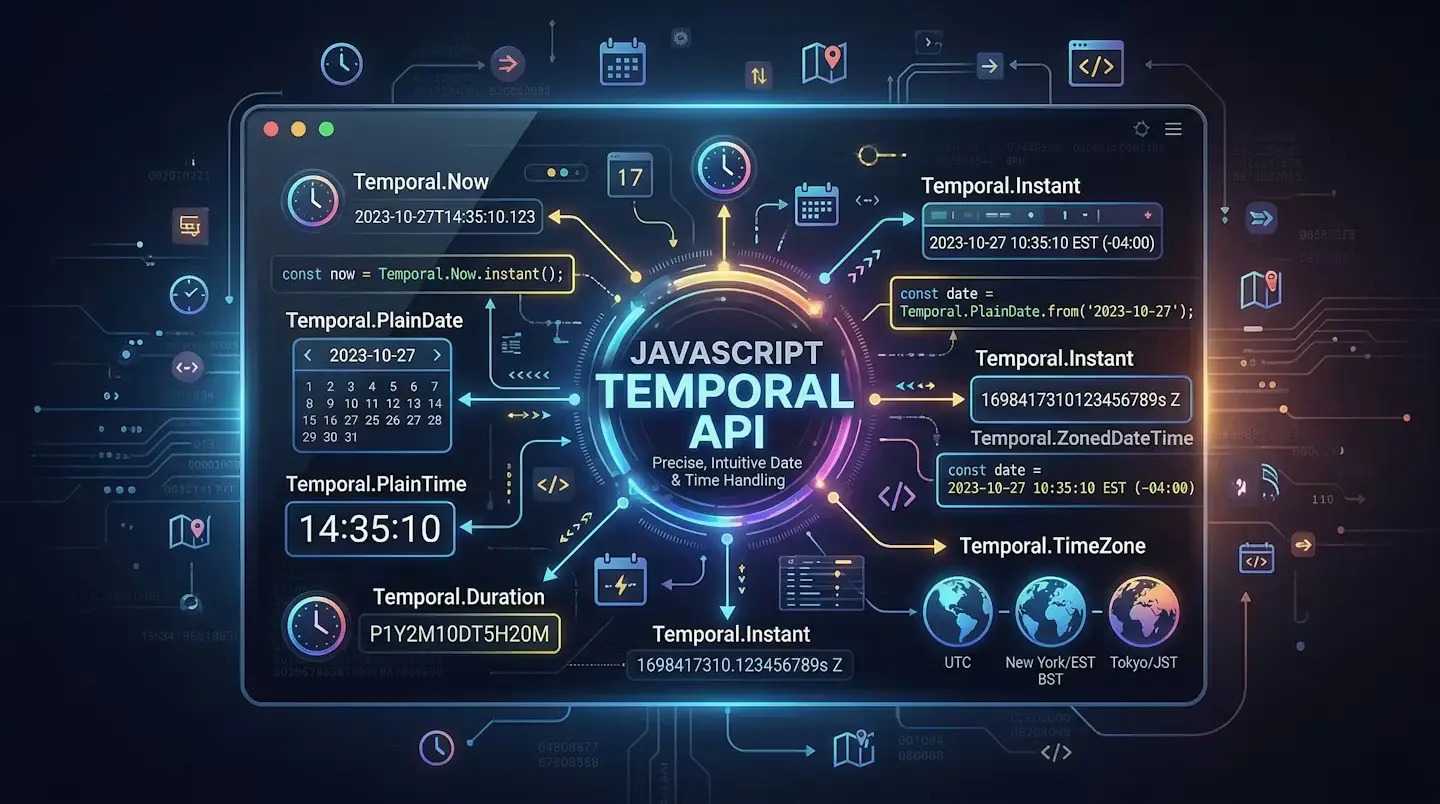
Start using the Temporal API- Javascript
JavaScript gets a predictable, timezone-aware, DST-safe date and time API and is available in the current version of Chrome, Safari (with useTemporal flag) and Node.js 23+.

The Power of Ten. Rules for Developing Safety-Critical Code in JavaScript
To make this clear from the start, this article has my opinion on how to translate to JavaScript The Power of 10: Rules for Developing Safety-Critical Code, which was written with 'C' in mind. In safety-critical software systems, such as medical devices, aviation industry etc, reliability has primacy. Here’s how Gerard J. Holzmann's Power of Ten can be applied to JavaScript.

The Half-Distance Paradox. Simulation in Go
In this article, we'll explore a fascinating concept often referred to as the "half-distance paradox," using Go. This paradox comes from an idea in mathematics and philosophy, where a person or object is thought to always halve the distance between themselves and their goal, making it appear that they can never actually reach their destination. This program will simulate the concept and give us some insight into the way it behaves in computing.

The minimum subarray problem with JavaScript
The Minimum Subarray Problem can be compared to real-world scenarios where you want to minimize some negative outcome over a period of time or across sequential steps. Here's how it could relate to several real-life situations...

Cutting corners will bite you back. Or maybe not, but someone will feel the pain
As a programmer, it is very easy to fall into the trap of cutting corners, neglecting the way you are writing code. I've worked in quite a few companies in the last few years and these are the most common corner cuts that I`ve noticed among my colleagues.

Golang, Go read JSON data from a file and create a slice of struct
Using a JSON file which contains a collection of people, read the JSON and map it to a slice of struct.

HTTP/HTTPS server with Go 1.22, with nested routing, middleware and more
In my effort to learn Go 1.22 I've tried to see which of my skills learned in express/node.js can be transferred to GO.

What are React Server Components? How it works?
This time around we are not dealing with a new fancy API but rather a new application architecture whict lets you fetch data in asynchronous components that run on the server or even during the build time. Let's have a look at what React team has in the store for the future.

This is how a Javascript engine works
A JavaScript engine is a program that converts code into machine-readable instructions which can be executed by the computer's hardware. Modern JavaScript engines no longer just interpret code, they compile it. V8 is a JavaScript engine developed by Google for Chrome and Chromium web browsers. V8 is written in C++, it is portable and runs on Mac, Windows, Linux and other systems. Because of it's popularity, V8 will be the subject to disect in this article.

Destroy event listeners with AbortController
The other day, I came across an unconventional usage for AbortController API. I was aware that AbortController can be used for better control over web requests, but I never thought to leverage it with event listeners. I assume you know how to use the traditional EventTarget: removeEventListener() method so I will not talk about that, today we are talking about an alternative.

Using asyncio for concurrent http requests with Python (asyncio.ensure_future and asyncio.gather)
Python has a few ways for implementing fetching data using http with various packages. "requests", "asyncio", etc. In this article will make a practical example that demonstrates how to run 100 requests concurrently as asyncio tasks and then how to save the results to a file as json, using asyncio.ensure_future and asyncio.gather. Why would I want to use asyncio.ensure_future and asyncio.gather? Click the article to read more ...
Set Environment Variables in LINUX with PM2 for Node and more
Environment variables are an essential component of any Linux system, enabling the configuration and behavior of various applications and services. In this article, we will explore how to print, set, and use environment variables in Linux, along with a specific focus on PM2's "--update-env" flag for restarting services. Whether you're a beginner or an experienced Linux user, this guide will help you navigate the world of environment variables and enhance your system's functionality.